Sunday, September 25, 2016
Monday, September 5, 2016
Sunday, June 12, 2016


Monday, March 21, 2016
Chuyện Người Muốn Nổi Tiếng

Hot Boy Săm Trổ trên thật là : Hoàng Anh Lê . Nổi Tiếng với hình săm có 1 không 2 trên cơ thể khắc họa tinh xảo với vẻ đẹp trai không kém diễn viên hàn quốc .
Hot Boy Săm Trổ nổi lên nhờ vào " Khoe " vẻ đẹp từ đường nét săm cũng như cái giàu có và quan hệ " Con Cha Cháu Ông " được nhiều người quan tâm và theo dõi .
Hot Boy Săm Trổ nổi lên nhờ vào " Khoe " vẻ đẹp từ đường nét săm cũng như cái giàu có và quan hệ " Con Cha Cháu Ông " được nhiều người quan tâm và theo dõi .
Tuy nhiên , mấy ngày qua trên mạng xã hội FaceBook Việt Nam ngoài các Ca Sỹ đình đám Như : Nghệ Sỹ Hoài Linh , Diễn Viên Hài Trường Giang , MC Trấn Thành lụp xụp tin tức tình cảm của mình thì Hoàn Anh Lê được các bạn trẻ cùng chơi Face Chăm sóc đặc biệt khi bỏ ra 20 triệu đồng Tìm Thánh Chửi Dương Minh Tuyền .
Hành Động đó, làm cộng đồng mạng e ngại và bức xúc khi đem tiền ra chi phối lòng người cũng như thể hiện sự giàu sang của bản thân .
Ngay sau khi STT đăng tải , Một số anh em Dương Minh Tuyền cũng như người ngoài cuộc quá bức xúc cũng đăng tải video đáp trả Tìm , đánh Hoàng Anh Lê .
Ngay sau khi STT đăng tải , Một số anh em Dương Minh Tuyền cũng như người ngoài cuộc quá bức xúc cũng đăng tải video đáp trả Tìm , đánh Hoàng Anh Lê .

Ít ngày sau đó , việc Hot Boy Săm Trổ bị đánh và gửi lời xin lỗi tới Anh Dương Minh Tuyền và xem đó chỉ là trò đùa muốn bám vào anh nổi tiếng , không ngờ sự việc lại xảy ra như vậy .
Chưa dừng tại đó , Anh Chàng Huỳnh Tấn Đạt mệnh danh chuyển giới nét đẹp thiên thần có quan hệ cùng Hoàng Anh Lê gần đây luôn đăng tải đoạn video khóa khích gửi đến đối phương đã đánh người bạn thân của mình với lời ác ý .

Thursday, March 17, 2016
Video Học Sinh Lớp 6 Kéo Nhau Vào Nghỉ Gây Xôn Xao

Hiện Cộng đồng mạng đang phẫn nộ bở một nhóm 9 học sinh tụ tập tại nhà nghỉ có ý đồ .
Video được phát tán nhanh chóng mặt với thời đại Mạng FaceBook được sử dụng hầu hết từ các bạn trẻ cho đến lứa tuổi phụ huynh .
Video được phát tán nhanh chóng mặt với thời đại Mạng FaceBook được sử dụng hầu hết từ các bạn trẻ cho đến lứa tuổi phụ huynh .
Vụ việc nhanh chóng được các cơ quan có thẩm quyền vào cuộc và làm rõ vụ việc . Song , nhìn về khía cạnh khách quan thì rõ ràng dưới 18 Tuổi cùng dắt nhau vào nhà nghỉ là chuyện không nên có bởi đó sẽ tập thói quen không lành mạnh cho lứa tuổi còn đi học bậc trung .

Sunday, March 13, 2016
Popular Restaurants In America - Zpizza The Pure One
Welcome to viet nam .
You are a foreigner, you are from Europe or the US citizen
Enjoy visiting famous tourist spots and most beautiful in Vietnam.
Picnic ended, I introduced a water-based restaurant fine.
Pizza with delicious and appetizing. Wear Brand America.
Keeping traditional US citizens.
Zpizza exciting destination for your meal.
Friday, March 11, 2016
Đam Mê Dịch Vụ - Chọn Nghành Nhà Hàng

Đam mê dịch vụ :
Bạn luôn muốn thử thách không sắp đặt trước , muốn khám phá và làm hài lòng người xung quanh .
Bạn luôn hạ thấp mình , cúi chào người khác dù họ ít tuổi hơn .
Hãy thử thách và tiếp cận trực tiếp với khách hàng .
Không ngại khó khăn , luôn luôn tìm cái mới và hướng tới mọi người xung quanh một không khí vui vẻ và thoải mái khi tới gần .
Chấp nhận tất cả rủi ro và sẵn lòng giúp đỡ , suy nghĩ xem bạn có nên theo nghề dịch vụ . Dịch vụ sẽ giúp bạn tiếp cận nhiều người , các khách hàng có tính cách khác nhau .
Chấp nhận tất cả rủi ro và sẵn lòng giúp đỡ , suy nghĩ xem bạn có nên theo nghề dịch vụ . Dịch vụ sẽ giúp bạn tiếp cận nhiều người , các khách hàng có tính cách khác nhau .
Bên cạnh đó , Dịch vụ nhà hàng là chọn lựa khó hợp lí cho những người tỉ mỉ và chịu khó sẵn sàng phục vụ làm hài lòng con người khó tính nhất .
Bạn có nhận trách nhiệm , bạn không quản đam mê hãy thử tiến đến nhà hàng . Tiếp cận , học hỏi và trau dồi nghiệp vụ của mình .
Không có nghề nào hơn nghành nhà hàng , bạn học nhiều kinh nghiệm trong xử lí tình huống .
Đặc biệt , tìm những nhà hàng có lượng khách nước ngoài đến dùng bữa nhiều hơn bởi chính họ là người khó tính nhất .
Tại sao bạn không thử tìm , học theo một số phong thái Nhật - Hàn và Tư cách phục vụ người Mỹ .
Nó sẽ giúp ít bạn rất nhiều bởi khi hạ thấp cúi chào , họ sẽ nghiêng mình chào lại bạn .
Mách nhỏ : Mình gặp nhiều khách Việt có vẻ ngại ( Sợ ) và khó chịu khi gặp phải người cúi thấp mình chào hỏi .
Mách nhỏ : Mình gặp nhiều khách Việt có vẻ ngại ( Sợ ) và khó chịu khi gặp phải người cúi thấp mình chào hỏi .
Trong đó , Tôi được mệnh danh trong lòng một vị khách nước Mỹ là Người Nhật .
Lưu ý cho bạn đam mê chọn nghành nhà hàng , cống hiến hết mình trong công việc là phải biết con đường mình đi về sau sẽ như thế nào ?
Bạn sẽ cống hiện được những gì tới khách hàng .
Bạn có dám học hỏi trao dồi vốn từ và kinh nghiệm .
Cũng như mình : Từ lúc thấy mấy anh chị thay nhau nghỉ , mình cũng dừng việc chủ động ups mấy chai Mancura .
Tư tưởng khi làm việc : Hãy học hỏi và như " Duck " để mình hạ thấp xuống .
Mình có thời gian học hỏi người chị rất nhiều . Còn giờ chẳng biết học ai nên cứ chìm một chỗ chẳng học được gì .
Nói chung : Đam mê - cống hiến cho công việc nhưng bạn cũng phải kể đến tiền lương có thu nhập như dự định để mà nhập tâm vào đó hay không !
Friday, August 1, 2014
Full-moon festival
 |
| Mid-autumn night |
According to many documents of some countries in Asia, the Mid-autumn festival originated from China since Duong Dynasty (618-917). In this year, in the full moon day, when the King went out for a walk to enjoy the scene, he met a fairy which changed into an old man with white hair. This many with his magic power made up a beautiful rainbow which connected the Moon and Earth. King had chance to visit Quang Han Palace, where the Queen of the Moon lives. After coming back Earth, he decided to hold the full-moon festival to remind himself of this interesting experience. On that day in the past, people just drinking wine and viewing the moon. After that, people feel boring while viewing with only wine. Man decided to make some kind of cake so that the day will be more and more meaningful.
Moon cake:
 |
| Tea and Moon cake in full-moon day |
Full-moon day is the day that Chinese people celebrated the victory against Mongolian in the 14th century. By an ingenious way, the soldier put pieces of paper written the day of the counter inside the cake then gave them to others that were staying among the Mongolian. After defeating the enemy, that kind of cake become an important part of people life to remind them of the essential victory to gain freedom. Today, the cakes are made from powder, lotus nuts and other ingredients.
Hang Nga – Queen of the Moon:
 |
| Hang Nga according Asian imagination |
Along with the moon cakes, there are stories about Hang Nga, the person who takes care of the moon according to Asian belief. In past, there used to have 9 suns in the sky and these suns made the temperature of Earth hotter than ever. At that time, a young man name Hau Nghe tried to climb the highest mountain – Con Lon, used the magic bow with purpose to shot down all of the sun. But after that he realized that without sun, all creatures would die, so he just shot down 8 suns. Since then, the Earth became much more beautiful and cooler. When he came back, he got married to a girl named Hang Nga. Once day, when Hau Nghe went out for hunting, the Heaven Queen met and gave him a kind of medicine, said that, after using it, he can live permanently. Coming back home and gave it to his wife as he did not want to stay alone. But he did not know that there was a bad person knowing about this medicine. One day, when he went out for hunting, this man came and ask Hang Nga for the precious medicine. She refused to give him because she knew he was a bad one. She drunk all of it. After drinking, she was blown very far away and when she wake up, it was in the moon. Coming back home, Hau Nghe could not find his wife. Trying to find in vain, he looked up to sky and suddenly saw her in the moon. He talked with other people there and they decided to build up a temple to worship and ask for health and luck. Since then, the custom of worshiping the moon in full-moon festival started.
Friday, March 28, 2014
Besides some big and famous pagodas, Hanoi also has many other smaller but really beautiful and interesting with both attractive sightseeing and mysterious legends.
1. TRAN QUOC PAGODA
Located in the North of Hanoi, in the middle of West lake, Tran Quoc pagoda is considered to be the oldest one in Hanoi. Tran Quoc pagoda is not only the oldest pagoda in Hanoi but it is also one of the most unique pagodas of Vietnam.
This pagoda was built under Ly Nam De dynasty, about 544 – 548. At the first time, this pagoda located on Red river bank, An Hoa village, Quang Duc district (Yen Phu, Tay Ho now). At that time, there was a big collapse of the river bank, therefore, the pagoda was moved to the current place in 1615.
For many years, Tran Quoc pagoda has had many different names like Khai Quoc, An Quoc, Tran Bac. At the end of 17th century, under Le Hy Tong dynasty, this pagoda was named like it is today
Considered to be one of the brightest stars in Vietnam's literary and intellectual circles. It is the place to worship National Hero Tran Hung Dao, who was the famous general, led the Vietnamese people to victory over the Yuan aggressors.
Hoe Nhai Pagoda is located at 19 Hang Than street, Ba Dinh district. Hoe Nhai is pagoda’s location so people named for pagoda like that. The original name is Hồng Phúc Tự. It means “Pagoda of Immense Beatitude”.
The One Pillar Pagoda or Dien Huu Pagoda , which literally means “long lasting happiness and luckiness”) is a historic Buddhist pagoda in Hanoi, the capital of Vietnam. As visiting Hanoi, tourists may come to various other monuments, parks and historical places. However, the One-Pillar Pagoda reflects the architectural splendor that the country has grown.
 |
| Tran Quoc Pagoda |
 |
| Tower garden in Tran Quoc |
This pagoda was built under Ly Nam De dynasty, about 544 – 548. At the first time, this pagoda located on Red river bank, An Hoa village, Quang Duc district (Yen Phu, Tay Ho now). At that time, there was a big collapse of the river bank, therefore, the pagoda was moved to the current place in 1615.
For many years, Tran Quoc pagoda has had many different names like Khai Quoc, An Quoc, Tran Bac. At the end of 17th century, under Le Hy Tong dynasty, this pagoda was named like it is today
2. NGOC SON TEMPLE
Considered to be one of the brightest stars in Vietnam's literary and intellectual circles. It is the place to worship National Hero Tran Hung Dao, who was the famous general, led the Vietnamese people to victory over the Yuan aggressors.
 |
| Ngoc Son Temple main gate |
The temple as it is today was made by Nguyen Van Sieu in 1864. A Confucian scholar, Nguyen Van Sieu had a large pen-shaped tower built at the entrance of the temple. On the upper section of the tower, also called Pen Tower, are three Chinese characters: “Ta Thanh Thien”, which literally means "to write on the blue sky” is to imply the height of a genuine and righteous man's determination and will, meaning "ink stand", is carved from stone resembling a peach placed on the back of the three frogs on top of the gate to the temple; and The Huc bridge which means "where first coming of morning sunshine touch".
HOE NHAI PAGODA
Hoe Nhai Pagoda is located at 19 Hang Than street, Ba Dinh district. Hoe Nhai is pagoda’s location so people named for pagoda like that. The original name is Hồng Phúc Tự. It means “Pagoda of Immense Beatitude”.
 |
| Hoe Nhai Gate |
It was built in 1010 under Ly dynasty. At the beginning time, it was one of the largest in the capital, covered 3000 m2 area. Because of war, pagoda was destroyed. Until 17th century, the nanny of King Le Hy Tong, who was born at this place, was rebuilt Hong Phuc pagoda. She invited Monk. Thuy Nguyet to become Senior Monk. Thuy Nguyet was the first monk who expanded Tao Dong sect into Vietnam.
 |
| Special Statue inside Hoe Nhai Pagoda |
During its history, Hoe Nhai pagoda had 48 Senior Monks and had a lot of changed. Nowadays, Hoe Nhai pagoda covers 1000m2 with 5 houses, and surrounding garden and stupas.
There are 68 statues in pagoda, 28 stone steles. Moreover, Hoe Nhai pagoda is still keeping a lot of valuable stuffs for history, cultural, arts.
There are 68 statues in pagoda, 28 stone steles. Moreover, Hoe Nhai pagoda is still keeping a lot of valuable stuffs for history, cultural, arts.
ONE PILLAR PAGODA
The One Pillar Pagoda or Dien Huu Pagoda , which literally means “long lasting happiness and luckiness”) is a historic Buddhist pagoda in Hanoi, the capital of Vietnam. As visiting Hanoi, tourists may come to various other monuments, parks and historical places. However, the One-Pillar Pagoda reflects the architectural splendor that the country has grown.
 |
| One pillar pagoda |
It is said that, Emperor Ly Thai To of the Ly dynasty, who had no children, used to go to pagodas to pray to Buddha for a child. One night, he dreamt that he was granted a private audience to the Bodhisattva Avalokiteshvara, who was sat on a great lotus flower in a square-shaped lotus pond on the western side of Thang Long Citadel, gave the King a Babyboy. One month later, when the Queen had pregnant and gave birth to a male child, the Emperor ordered the construction of a pagoda supported by only one pillar to resemble the lotus seat of his dream in the honor of the Bodhisattva Avalokiteshvara. According to a theory, the pagoda was built in a style of a lotus emerging out of the water.
LANG PAGODA
 |
| Lang Pagoda |
The Lang Pagoda was built under the reign of King Ly Anh Tong (1138-1175). Over 8 centuries have elapsed since its original construction and its exterior has undergone numerous changes during repairs. It was last altered during the mid-19th century.
The beauty of the Pagoda's architecture is its own very composition, harmonious and balanced. The gate is a line of four brick pillars with three intricately curved roofs. The square pillars stretch skyward with the two central pillars the highest ones. The three curved roofs are not on top of the pillars but rather attached to their sides with the mid-roof higher than the other two, thus creating a solemn gesture.
Hanoi still has so many other interesting temples and pagodas that are very closed to Hanoi people's life. Hope that you may have interest on things like that
Thursday, March 6, 2014
More and more pagodas with AMAZING festivals in Hanoi attract tourists in Spring. These pagodas are becoming a necessary part of local people life.
Keo Pagoda - Thai Binh province
Location: Dung Nhue Hamlet, Duy Nhat Commune, Vu Thu District, Thai Binh Province
Name: Than Quang pagoda
Main festival: 13th to 15th of the ninth lunar month
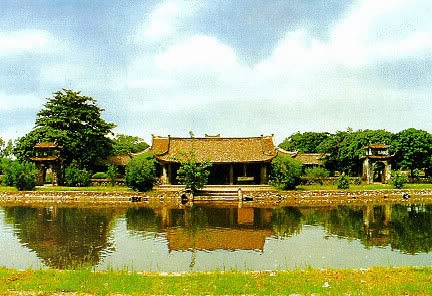
It is said that Duong Khong Lo Monk built Keo Pagoda between 1133 and 1154. He is both a famous Monk and famous doctor in Ly Dynasty. After successful treatment for King Ly Thanh Tong from a serious disease, he was honorably given the title of Quoc Su (Royal Teacher) and plenty of money and land. He used that to build the pagoda.
 |
| Ancient Keo Pagoda |
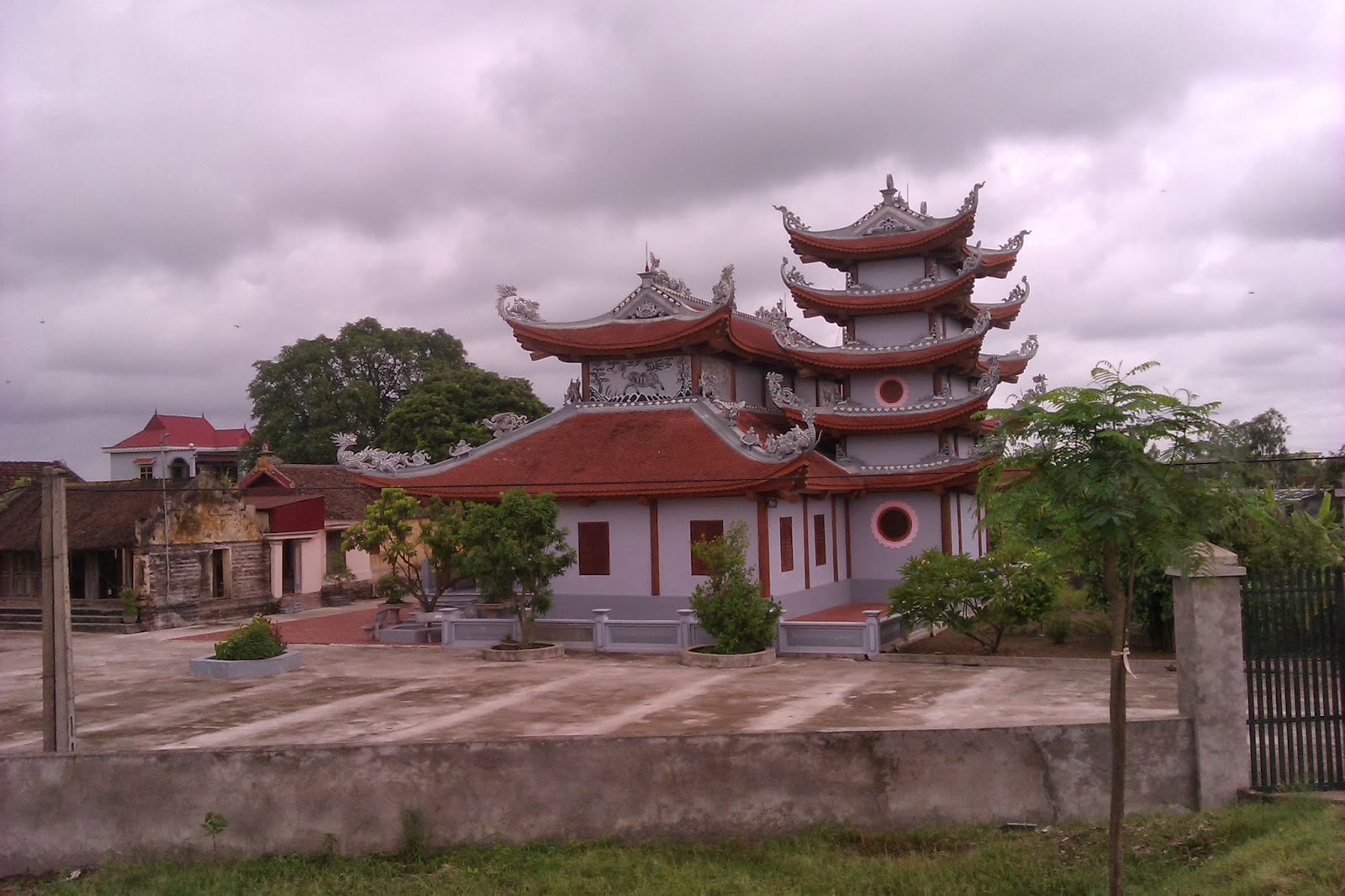
Architecturally, Keo Pagoda is impressive to both domestic and foreign tourists in Vietnam travel who have chances to visit the pagoda at least once time. The pagoda stretches the area of 7,200 square meters, bordering the Red River. There are two passages which separate the pagoda and temple. They are decorated with curved roofs that join together at the 11.5 meter-iron wood bell tower. This iron wood bell tower has three stories, each of which possesses its own tiled roof and bronze bell. Up to now, Keo Pagoda has proudly preserved one of the few surviving sets of rod puppets in Vietnam.
 |
| Carving in pagoda |
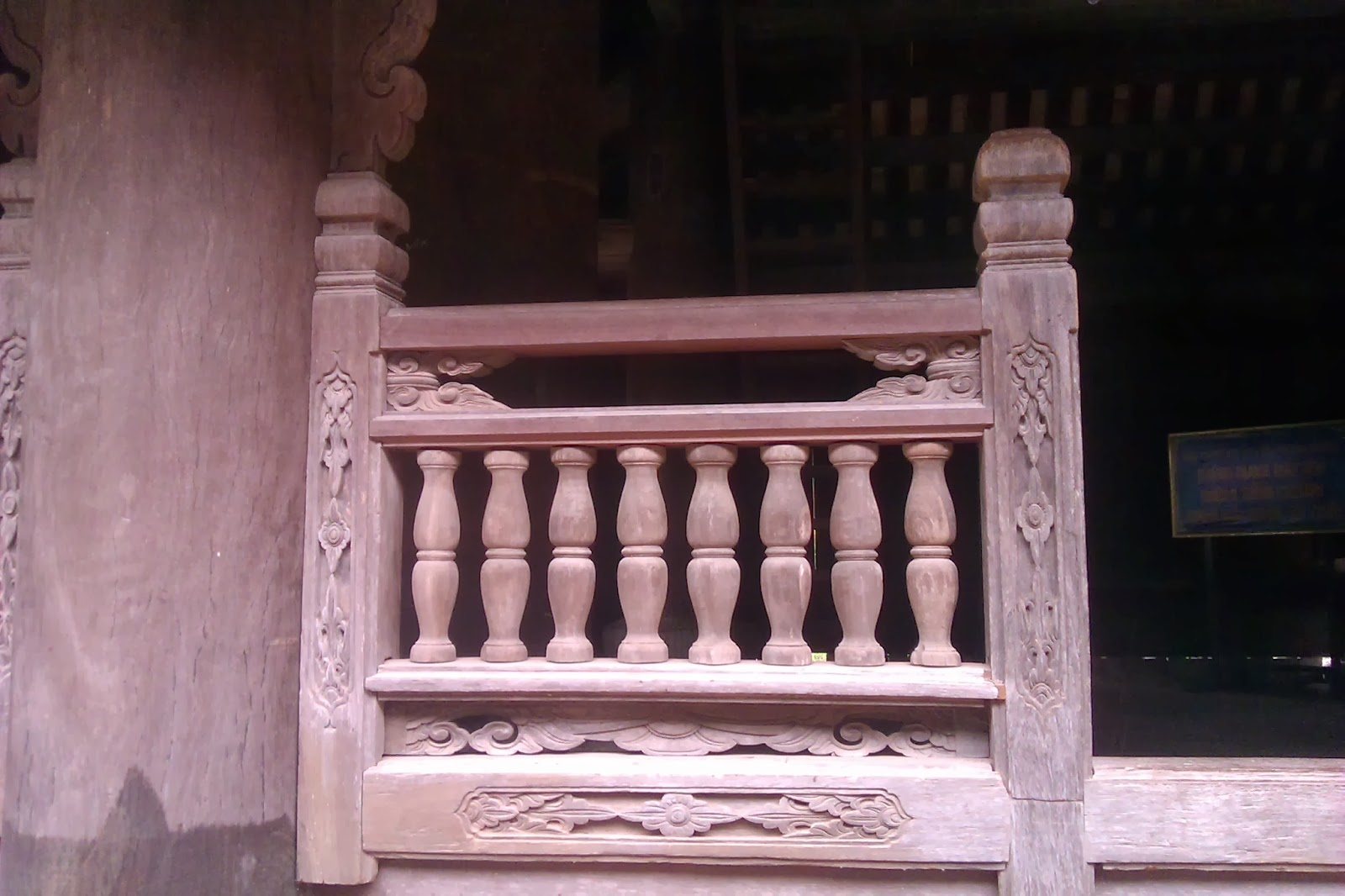
It is said that Keo Pagoda is a home to a wealth of ancient relics which ranges from intricately engraved wooden dragons to a collection of over 100 statues. Here is also preserved many valuable antiques, such as a pair of candlesticks from the Mac Dynasty, some pottery ware and altars from the Le Dynasty, imperial boats, etc. It is surprising that all of them are kept intact as they were during the time of the Le Trung Hung Dynasty in 16th century.
 |
| Keo pagoda in rainy day |
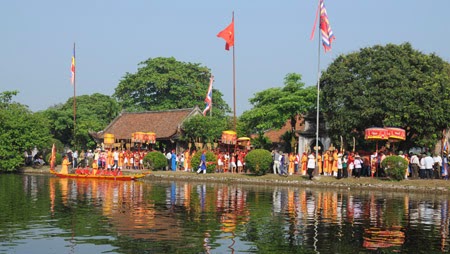
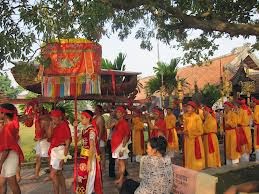
Keo Pagoda Festival is held from the 13th to 15th of the ninth lunar month annually, 100 days after the death of the Monk Duong Khong Lo. As with all other Vietnam festivals & events, Keo Pagoda Festival in Thai Binh also begins with a procession to remind people of the anniversary of the Buddhist monk. This is followed by a boat race and a literary recital competition during the day. The night is welcomed by the trumpet and drum competition.
 |
| Keo pagoda festival |
The second day’s ceremony of the Keo Pagoda Festival, Thai Binh Vietnam also begins with a procession with a carriage pulled by a red and white horse. This is accompanied by 8 flag bearers and 42 men in their tradition verve. A ceremony is held in the Gia Roi temple in the later half of the day.
 |
| Keo festival |
The final day’s ceremony includes more of entertainment and games like duck catching, rice cooking competition and firecracker hurling competition. Keo Pagoda Festival, Thai Binh Vietnam is a three days festival celebrating the traditional customs and religious ceremonies of Vietnam.
Location: Dau Village, Thanh Khuong Commune, Thuan Thanh District, Bac Ninh Province.
Characteristics: Built in the 3rd century, Dau Pagoda is the oldest pagoda in Vietnam.
Main festival: 8th of the fourth lunar month.
As Dau Pagoda was the biggest and oldest pagoda in the Buddhist center region, many monks from either India or China came there to do research and spread Buddhism to the local residents.
Dau pagoda - Bac Ninh province
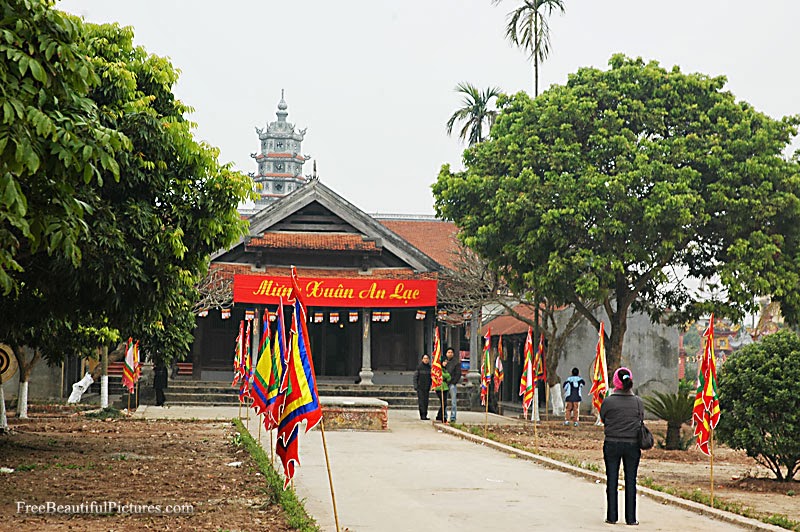
Location: Dau Village, Thanh Khuong Commune, Thuan Thanh District, Bac Ninh Province.
Characteristics: Built in the 3rd century, Dau Pagoda is the oldest pagoda in Vietnam.
Main festival: 8th of the fourth lunar month.
As Dau Pagoda was the biggest and oldest pagoda in the Buddhist center region, many monks from either India or China came there to do research and spread Buddhism to the local residents.
 |
| Dau pagoda in Bac Ninh |
This ancient pagoda has undergone many restorations and expansion, with the largest construction undertaken under the Ly - Tran dynasty. Going through the fluctuation of history, although many structures in the region were destroyed, the pagoda still exists and preserves the traditional oriental architecture style especially the wood block aged about 1752 years old and two bronzes' Xa Loi bodies of Vu Khac Minh and Vu Khac Truong monk.
 |
| Hoa Phong tower |
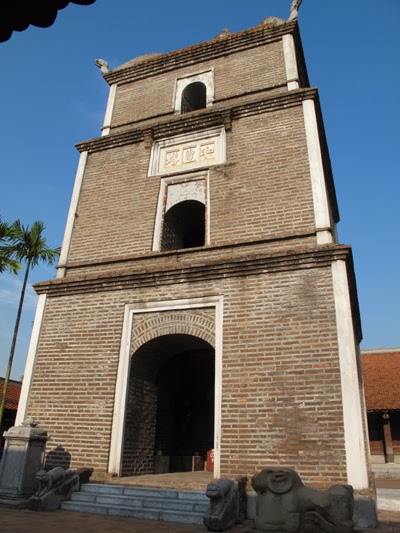
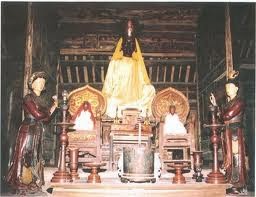
The yard in front of the pagoda hosts a three stories tower name Hoa Phong. The tower originally had six stories but it was partly destroyed. Inside the tower, there are a number of valuable artifacts such as a large bell dating back in Canh Thinh Dynasty (1793), a big bronze gong casted in Ming Mang Dynasty (1817) and several statues of Gods in Buddhist legends.
 |
| AMAZING statue in dau pagoda |
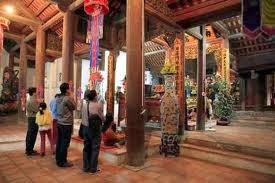
The Dau Pagoda Festival was held on the eighth day of the fourth lunar month, commemorates the goddess Man Nuong and is dedicated with the Cloud, Lightning, Rain and Thunder Spirits. This is also the birth date of Buddha, further adding significance to this festival.
 |
| Inside Dau pagoda |
People come from all over the province to enjoy the country fair, where there are lion dances, wrestling and a human chess game. A stick dance is held where thirty-two sticks are brought from one pagoda to the other. People from two nearby villages Phung Quan and Thang Dao were competing for the title of the swiftest at fetching a pail of water. This day has great meaning for the Buddhists who make their annual pilgrimage to the Dau Pagoda, among the oldest pagodas in the country. Many Buddhists believe they must visit this site every fourth lunar month to pay respect to the goddess Man Nuong.
Tay Phuong pagoda - Hanoi
Location: Yen Village, Thach That District, Hanoi
Characteristics: It is also an exposition gallery for many national engraving and sculpture masterpieces.
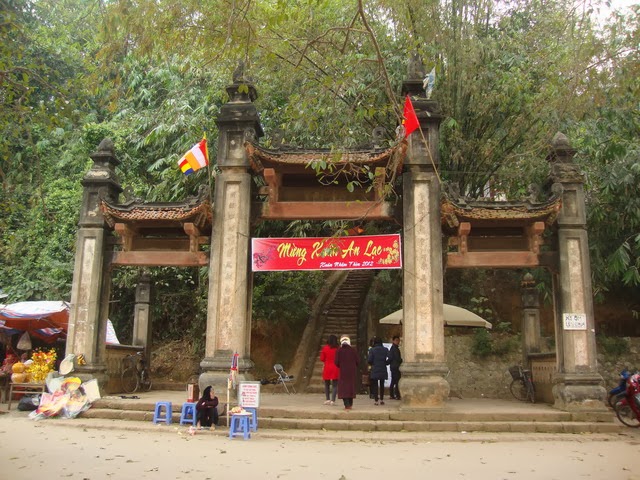
Tay Phuong Pagoda locates in In Yen Village, Thach That District, Hanoi and about 30km from center Hanoi City. It is also an exposition gallery for many national engraving and sculpture masterpieces. From the long time ago, it is considered as one of Amazing destinations of North Vietnam.
.JPG "Tay Phuong pagoda") |
| Tay Phuong pagoda |
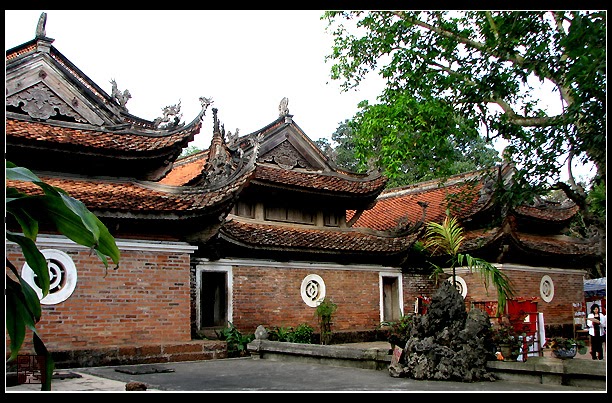
In 1794 under the Tay Son regime, Tay Phuong pagoda was completely renewed, and the design has been kept till now. It comprises three successive constructions: the Hall of Prostration, the Main Shrine, and the Sanctuary, all with double tiered roofs. It seems that this architectural arrangement is inspired by Buddhist and Confucianism thought: the three constructions symbolize the three forces governing the world.
.jpg "Right side of Tay Phuong pagoda") |
| Right side of Tay Phuong pagoda |
The central construction has a directing role and is consequently raised higher than the others. It symbolizes Heaven. The construction at the rear plays the role of a foundation: it symbolizes the earth. The construction closest to the world of man stands in front. The whole structure is the symbol of Thai Cuc (the Prime Principle, from which the whole world derives). The double tier of the roof symbolizes the double principle, LuongNghi, yin and yang. The slopes, the roof on the four sides symbolize the four elements of heaven, TuTuong; the sun, moon, stars and deities, while the slopes on the eight sides stand for the Eight Signs of the Sacred Octagon.
.jpg)
Ahart Statues
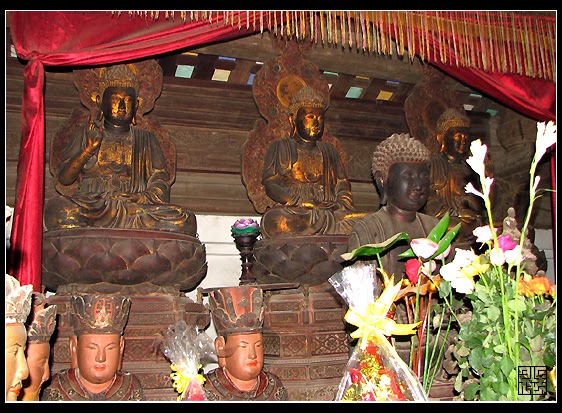
All the wooden parts of Tay Phuong pagoda are beautifully carved due to folk motifs: mulberry leat Ficusleat lotus flower, chrysanthemum; dragon, phoenix, etc. But the Tay Phuong Pagoda is mostly famous for the statues it contains, magnificent wooden sculptures representing Buddha as well as Vajrapanis and Arhats who are middle-ranking Buddhist deities.
 |
| Tuyet Son Buddha |
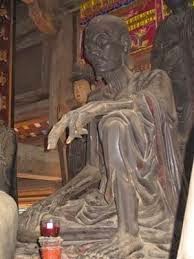
One in particular portrays Sakyamuni in meditation at the foot of Tuyet Son (Snow Mountain). He was then leading a life of extremely severe ascetics, and his emaciated body, as represented by the statue, shows good knowledge by the artist of human anatomy. The figures of the Arhats each bear distinctive features which depict meditation in original aspects. All are impressive works of art.
.jpg "Ancient Statue") |
| Ancient Statue |
A festival is held in the grounds of the Tay Phuong Pagoda in early spring each year. It features many games and entertainment: marionette performances, tug-of-war, cock fighting, chess with human chess pieces... The central piece of the festival is the Sam Hoi (Expiation) ceremony, held on the 6th day of the 3rd lunar month, which calls on all men to practice compassion and charity, to avoid wrong doing, and aim for serenity and quietude. It is the end of the tour around one of AMAZING VIETNAM Destinations like this place.
 |
| Amazing Tay Phuong pagoda |
Tây Phương Pagoda is not only an historical site with valuable architecture, but also a scenic spot in old Ha Tay Province. This place attracts a high number of tourists for this province each year, especially the Luna New Years’ time. Come to one of Vietnam Popular Destinations like this place at that time, you will probably like it too much. Hope you have a happy trip in my beautiful country.
Location: Thay Commune, Quoc Oai district, Hanoi.
Name: Thien Phuc Pagoda
Main festival: 5th -7th of 3rd lunar month
Thay Pagoda, or Thien Phuc Pagoda, is located at the foot of Sai Son Mountain, Quoc Oai District, Hanoi, just 30km southwest of Hanoi center.
Thay pagoda
Location: Thay Commune, Quoc Oai district, Hanoi.
Name: Thien Phuc Pagoda
Main festival: 5th -7th of 3rd lunar month
Thay Pagoda, or Thien Phuc Pagoda, is located at the foot of Sai Son Mountain, Quoc Oai District, Hanoi, just 30km southwest of Hanoi center.
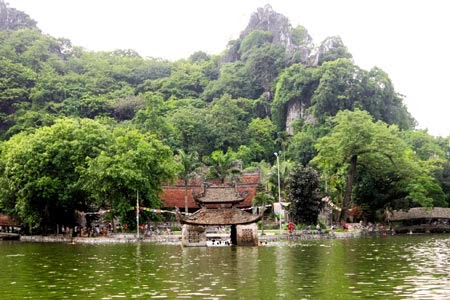 |
| Thay pagoda |
Thay pagoda was built in the 11th century under the reign of Ly Nhan Tong King. Firstly, it was a small pagoda managed by Monk Tu Dao Hanh. The pagoda was initially built according to Sino-Vietnamese character Tam - this character is formed by 3 hyphens parallel to each other.
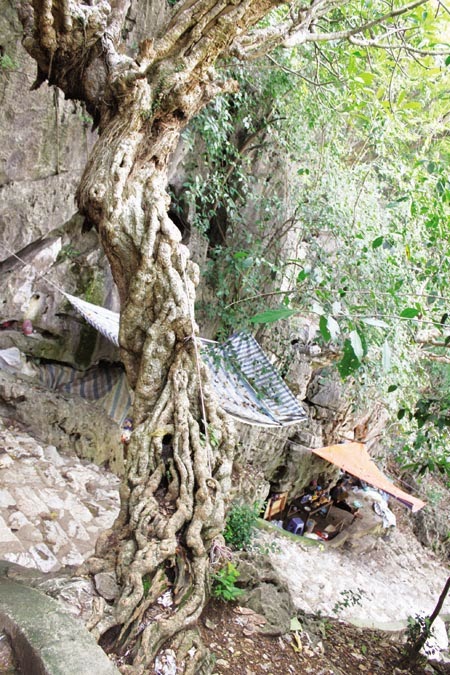 |
| Way to rach the pagoda |
The pagoda therefore includes of 3 parts: Lower Pagoda, Middle Pagoda, and Upper Pagoda. The outside part, Ha Pagoda, is a place for offering and ceremonies; the middle part, Trung Pagoda, is a place for worshiping Buddha; and final part is a place for worship of monk Tu Dao Hanh. An automated sandalwood statue of Tu Dao Hanh that stands and sits is located in a red lacquered shrine trimmed with gold and covered with a curtain.
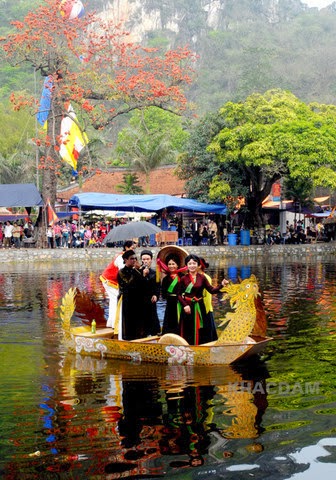 |
| Traditional singing in Long Tri Pond |
In front of the pagoda is Long Tri pond, in the middle of which is a stage called Thuy Dinh, where water puppet performances are held. Nhat Tien and Nguyen Tien bridges, built by doctor Phung Khac Khoan in 1602, are located on each side of the stage.
Interesting sites can be visited in the surroundings of the pagoda. For example, Phat Tich and Cac Co caves are located not too far behind the pagoda. A hole in the dome of Cac Co cave lets one see outside the cave
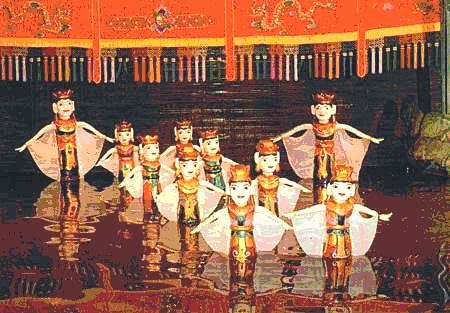 |
| Peppet show on Long Tri Pond |
The main festival of Thay pagoda takes place from 5th to 7th of the 3rd lunar month. In the festival, many monks and Buddhist followers come there to join that occasion. The ceremony of worshipping the Buddha and the ceremony of offering the God is the symbol for Thay pagoda festival. It is AMAZING. Besides, there are water puppets shows on Thay festival. Many couples come there as it is time for them to show their love to the other.
Thousands year Hanoi built up many AMAZING pagodas and temples. It is the reason why these places are the center of AMAZING NORTH VIETNAM.
Name: Co Phap Temple, Ly Bat De Temple
Location: Dinh Bang Village, Tien Son District, Bac Ninh province
Worshipping: 8 Kings of Ly dynasty
Main festival: 15 – 17 of 3rd lunar month
Do temple was built in 11th century in ancient Co Phap village (Dinh Bang nowadays). According to Monk Ly Van Hanh, the place used to build that temple was a holy place that has 8 dragons come to visit. It is also said that in the past, near the temple, there used to have a forest and Tieu Tuong river flow around; due to the Feng Shui, Vietnamese people believe to build a temple there will bring the prosperity to the country. For many dynasty of Vietnamese feudal, Kings always took highly consideration in repairing and widening that temple. The temple also has the unique folk architecture of Vietnam.
The main festival of Do temple occurs from the full-moon day to the 17th of the 3rd lunar month. It is the celebration of the day when Ly Cong Uan crowned to be the first King of Ly dynasty (1010). On the festival, people will have a ceremony to bring the palanquin of the King from the village to the main temple to describe the day when he became the King. In front the palanquin are some martial mandarin with more than 100 soldiers and follow the palanquin are 100 people in red clothe and black hats.
Phat Tich Pagoda is in Phat Tich Village, Tien Du District, Bac Ninh Province, just 30km from Hanoi. The pagoda is located in the south of the Phat Tich Mountain with many buildings along the path from the foot of the mountain leading to the top. The whole complex of Phat Tich Pagoda faces southward overlooking the Red River.
Name: Ninh Phuc Pagoda
Location: Situated on the dike of the Duong River, Dinh To Commune, Thuan Thanh District, Bac Ninh Province.
Characteristics: The pagoda was built in 17th century, according to "Noi Cong Ngoai Quoc" architectural style.
Main festival: 23rd -24th of 3rd lunar month
But Thap Pagoda has the Chinese name of Ninh Phuc Tu. It is located in But Thap hamlet, Dinh To commune, Thuan Thanh district, Bac Ninh province. This is a quite ancient pagoda and it has a big architecture scale of AMAZING North Vietnam. This place now is considered as one of Vietnam Popular Destinations in spirit life of people.
On the main festival of But Thap pagoda, there are two main parts: the ceremony is the same as many other pagodas with some offering to the Buddha to show respect and ask for good year with the bless of Buddha. After the ceremony, there are many activities like Chinese people chess, table tennis, birds releasing and Vietnam traditional folk songs…
Do Temple – Bac Ninh province
Location: Dinh Bang Village, Tien Son District, Bac Ninh province
Worshipping: 8 Kings of Ly dynasty
Main festival: 15 – 17 of 3rd lunar month
Do temple was built in 11th century in ancient Co Phap village (Dinh Bang nowadays). According to Monk Ly Van Hanh, the place used to build that temple was a holy place that has 8 dragons come to visit. It is also said that in the past, near the temple, there used to have a forest and Tieu Tuong river flow around; due to the Feng Shui, Vietnamese people believe to build a temple there will bring the prosperity to the country. For many dynasty of Vietnamese feudal, Kings always took highly consideration in repairing and widening that temple. The temple also has the unique folk architecture of Vietnam.
 |
| Do Temple |
In 1952, the French took and destroyed the whole temple and it was not until 1989 that the temple was recovered but the total square was limited. The total square of Do temple is 31.250 m2 included 21 items. In the center of the temple, there is altar to worship King Ly and around this, it is the house of patriarch, front sanctuary, Phuong Dinh house, palanquin house…
 |
| Three door gate of Do temple |
Do temple is an example for the architecture of temple and pagoda in the North of Vietnam. The first thing tourists can see when visiting that temple is the main gate with the image of 5 dragons carving on the top of the gate because dragon is the symbol for the power of King.
 |
| Front yard |
Besides, Do temple is also a center of culture and history in the North of Vietnam. Each year, many people come here to worship and ask for good health, luckiness, prosperity… It then becomes a center of culture in the North of Vietnam.
The main festival of Do temple occurs from the full-moon day to the 17th of the 3rd lunar month. It is the celebration of the day when Ly Cong Uan crowned to be the first King of Ly dynasty (1010). On the festival, people will have a ceremony to bring the palanquin of the King from the village to the main temple to describe the day when he became the King. In front the palanquin are some martial mandarin with more than 100 soldiers and follow the palanquin are 100 people in red clothe and black hats.
 |
| Do temple ceremony |
 |
| Dragon dancing |
 |
| Palanquin ceremony |
Besides the main ceremony, there are also a lot of activities like cock fighting, birds releasing, wrestling, Quan Ho singing…
Name: Van Phuc pagoda
Location: Phat Tich village, Tien Du district, Bac Ninh province
Characteristics: Buddhist monks were trained in the past in Phat Tich Pagoda.
Main festival: The 4th day of the first lunar month. Place: Phat Tich Commune, Tien Du District, Bac Ninh Province.
Phat Tich pagoda:
Name: Van Phuc pagoda
Location: Phat Tich village, Tien Du district, Bac Ninh province
Characteristics: Buddhist monks were trained in the past in Phat Tich Pagoda.
Main festival: The 4th day of the first lunar month. Place: Phat Tich Commune, Tien Du District, Bac Ninh Province.
Objects of worship: Quan Yin Buddha and Ly Thanh Tong.
Phat Tich Pagoda is in Phat Tich Village, Tien Du District, Bac Ninh Province, just 30km from Hanoi. The pagoda is located in the south of the Phat Tich Mountain with many buildings along the path from the foot of the mountain leading to the top. The whole complex of Phat Tich Pagoda faces southward overlooking the Red River.
 |
| Beautiful Gate of Phat Tich Pagoda |
Phat Tich in English means the Legend of the Buddha. It is said that in the 11th century, the giant Buddhist Tower at the pagoda fell down which revealed the gold-gilded Buddha statue of Sakyamuni Buddha. Since then, the village and the pagoda got the name Phat Tich.
 |
| Giant Sakyamuni statue |
Phat Tich Pagoda was expanded into a big complex in the 11th century under the Ly Dynasty, but archaeological artifacts found at the pagoda suggest that there had been a pagoda on the site from around the VII - X centuries. In fact, the region is believed to have been the area where Buddhism from India first arrived into Vietnam. And the tomb of King Duong Vuong is just across the Red River from Phat Tich pagoda.
 |
| Phat tich pagooda |
Phat Tich Pagoda's architecture came to its climax in the 17th century (1686) when it was expanded with funding from the first wife of Lord Trinh when he came to the pagoda and lived a monk-hood life.
 |
| Phat Tich tower |
The pagoda was totally destroyed by the French 1947 when they came back to Northern Vietnam. There have been massive efforts by local individuals, by Vietnamese Buddhist followers and by Buddhist monks to restore the Phat Tich Pagoda to its original grandeur from after the war, and the most recent re-construction work was just finished in 2011.
.jpg "Rocky statue in side pagoda") |
| Rocky statue inside pagoda |
 |
| Tower Garden |
Nowadays, visiting the Phat Tich Pagoda you can easily find back peace and tranquility amid the leafy yards and gardens that is shrouded in full zen atmosphere. Paradissa offers day trips and bicycle tours from Hanoi to the Phat Tich Pagoda along with other attractions of Bac Ninh Province.
But Thap pagoda
Location: Situated on the dike of the Duong River, Dinh To Commune, Thuan Thanh District, Bac Ninh Province.
Characteristics: The pagoda was built in 17th century, according to "Noi Cong Ngoai Quoc" architectural style.
Main festival: 23rd -24th of 3rd lunar month
But Thap Pagoda has the Chinese name of Ninh Phuc Tu. It is located in But Thap hamlet, Dinh To commune, Thuan Thanh district, Bac Ninh province. This is a quite ancient pagoda and it has a big architecture scale of AMAZING North Vietnam. This place now is considered as one of Vietnam Popular Destinations in spirit life of people.
 |
| Main gate of But Thap |
 |
| Tower in pagoda |
According to local people, the pagoda was built under Tran Thanh Tong dynasty. At that time, Huyen Quang monk was a nun in this pagoda. He had the stone tower of 9 floors built with the lotus shape but this tower is not available today. Until 17th century, the pagoda is famous for the nun of superior Buddhist monk named Chuyet Chuyet a citizen of Fujian province in China. In 1644, the nun passed away and titled to be a great by the king..
 |
| Ancient statue inside |
Differently with other Vietnam pagodas and temples, the architecture of this pagoda is mainly the combination between “Noi Cong Ngoai Quoc” shape and “Tam” shape. “Noi Cong Ngoai Quoc” shape looks like letter “I” inside a squre and “Tam” shape like three horizontal parallel lines. All the buildings face the South, traditional architecture of the Vietnamese. The pagoda is balanced in the center area but very natural in the surrounding area. The center area includes eight houses which are set in an axis which are three gates entrance, bell tower, fore sanctuary, upper sanctuary, Tich Thien Am palace, middle house, Mother of goddess palace, and back house.
 |
| 9 stories lotus tower |
 |
| 1 stele in But Thap pagoda |
 |
| Stone bridge |
There are two lines of stele house in the two sides and it runs along the length of the pagoda. At the left side and at the back of the lobby, there is a five-room house which is known as the house of patriarch and used for the worshipping place of the Buddhist priest Chuyet Chuyet, Minh Hanh. There are towers besides which are the tombs of the nun. The architecture of But Thap is also deeply marked by Chinese which are typically the stone bridge and Bao Nghiem tower.
In the corridor around the upper palace, there are many carving pictures of wood and stone. There are totally 51 carving pictures with many different topics with the generalization in the material, style and it is generalized in terms of time. The carving patterns are lively with the artistry characteristic with the topics of trees, flowers, birds, animals.
 |
| Carving on wood |
But Thap is one of the few numbers of Vietnam Pagoda which keeps the ancient unique architecture. Visitors come here come to ancient pagoda with brown statues of Buddha to the architectures of tower, yard, corridor…
 |
| Bodhisattva statue |
On the main festival of But Thap pagoda, there are two main parts: the ceremony is the same as many other pagodas with some offering to the Buddha to show respect and ask for good year with the bless of Buddha. After the ceremony, there are many activities like Chinese people chess, table tennis, birds releasing and Vietnam traditional folk songs…
Subscribe to:
Comments (Atom)